



Every man knows the rules of the men’s room.
And absolutely no networking.
But there’s another kind of men’s room, where men look each other in the eye, face each other directly, and talk to one another. I’ve been going to that men’s room for more than forty years.
It started In 1984 in Sydney, Australia. I was 35 and a stay-at-home dad, which in Australia back then was practically unheard of. I felt isolated, so I went to a community center to join a men’s support group.
I looked around at 65 strangers, all men, and thought, What the hell am I doing here? No beer. No scoreboard. Just chairs in a circle. Nothing scares a man like chairs in a circle.
But I stayed. We broke into small groups, and I discovered something. I had grown up without the love and support of a father, and many of those men had grown up the same way. Week after week, we gave each other what we had missed growing up: time, attention, and acceptance.
Then came the night I finally talked about my dad. My voice shook. I stared at the floor. When I looked up, every man in that circle was looking right at me.
One of them said, “We’re here for you, mate. We’ve got your back. We believe in you.”
Those Aussies spoke the words I had longed to hear from my dad. That experience changed how I understood friendship, trust, and what it meant to be a man.
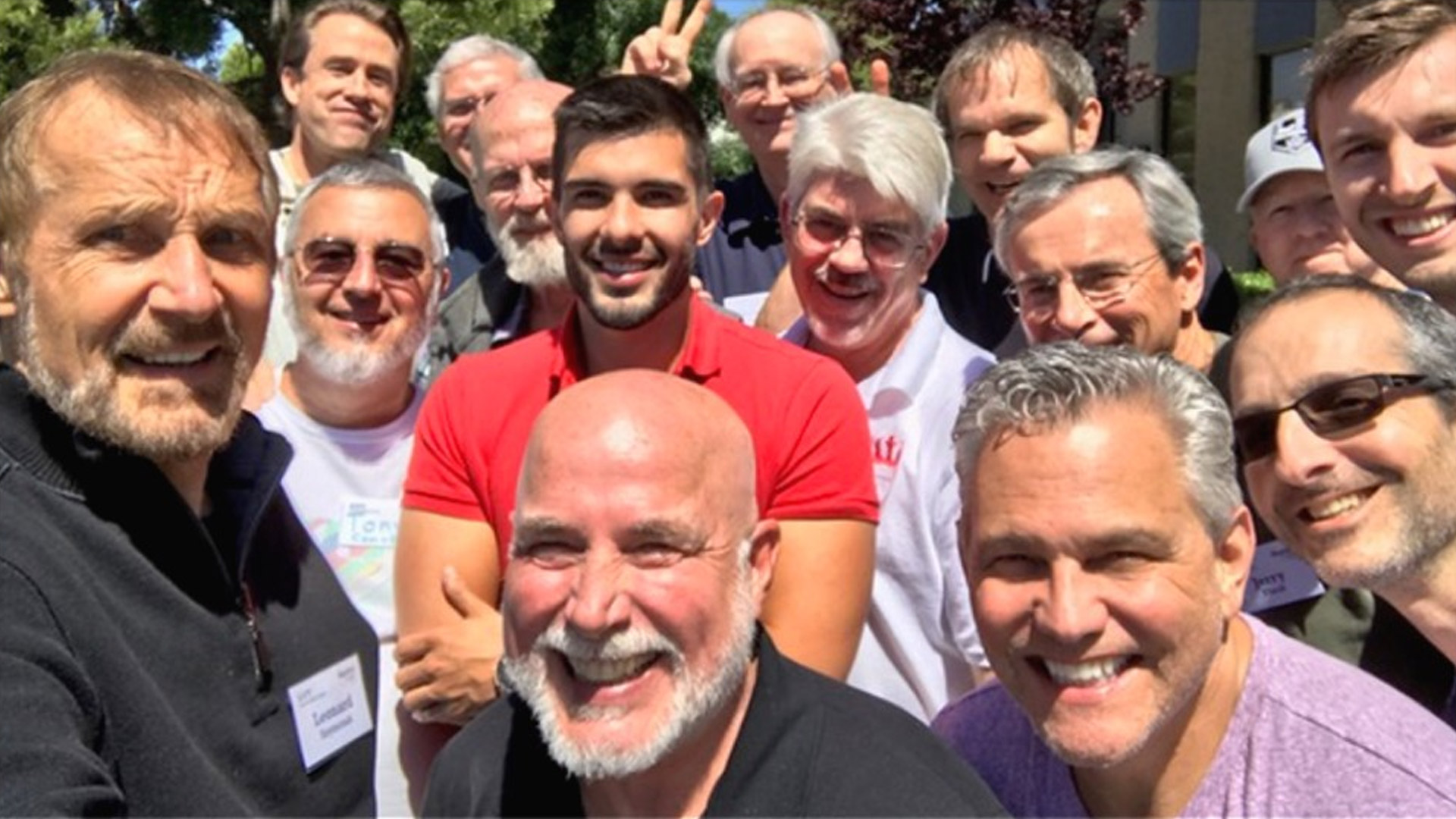
Since then, I’ve been in men’s groups in Sydney, Chicago, and Orange County. I’ve led many of them, and today I attend two: one online and one in my living room. These men have carried me through crises, cheered my victories, and challenged my thinking.
So let me take you inside that room.
The first thing you’d notice is four walls. Those walls provide structure, and men like structure. Say, “Let’s share our feelings,” and a man panics. Give him an agenda, and he breathes a sigh of relief.
So we check in. We have a theme. We take turns sharing. We listen. We ask for help. We hold each other accountable. But the most important thing that happens inside those walls is something you rarely see men do: we take off our armor.
It isn’t easy. Some of us have worn it so long it’s rusted on. A few guys need a crowbar. Others need the Jaws of Life.
We built that armor when we were young, following traditional rules of manhood: Be strong. Don’t show weakness. Solve your own problems. And never admit you’re wrong or afraid.
That armor may protect us from rejection, criticism, and shame. But the same armor that protects us from getting hurt also prevents us from getting close. Ever tried hugging a man wearing a suit of armor? Ouch.
In the men’s room, we slowly peel off the armor. When that happens, I’ve often heard a man say, “I thought I was the only one who felt that way.” Suddenly, we’re not alone.
Vulnerability isn’t weakness. It takes more courage to say, “I’m struggling” than to say, “I’m fine.” The strongest man in the room isn’t the one wearing the toughest armor. He’s the one with the courage to take it off, speak honestly about his struggles, and stand beside other men facing theirs.
Listening beats fixing. When a man shares his pain, he doesn’t need a toolbox. Sometimes, he simply needs someone to listen. That’s when the room goes quiet. We stop trying to fix one another and start understanding one another.
Connection matters. That means recognizing my own emotions rather than hiding them, accepting my imperfections, and connecting to others with an open heart. I don’t have to pretend to be stronger, smarter, or more successful than I am. I can just be myself.
Laughter heals. Men can be pretty ridiculous. We refuse to ask for directions, insist we don’t need help, and pretend we know what we’re doing even when we haven’t got a clue. But when we laugh at our mistakes and shortcomings, we realize no one is perfect. Laughter brings us together.
If you’re a man reading this, find a men’s group. Or gather a few trusted friends and start one of your own.
And if you’re a woman who loves a man, encourage him to find other men with whom he can share his struggles and victories.
True strength isn’t about facing life’s challenges alone. It’s about having the courage to ask for support and the compassion to offer it.
In 1984, I walked into a room of 65 strangers, wondering if I could trust other men. I entered that men’s room wearing armor. More than forty years later, I have a band of brothers.



The Roadmap Home: Your GPS to Inner Peace

Fighting for Love: Turn Conflict into Intimacy